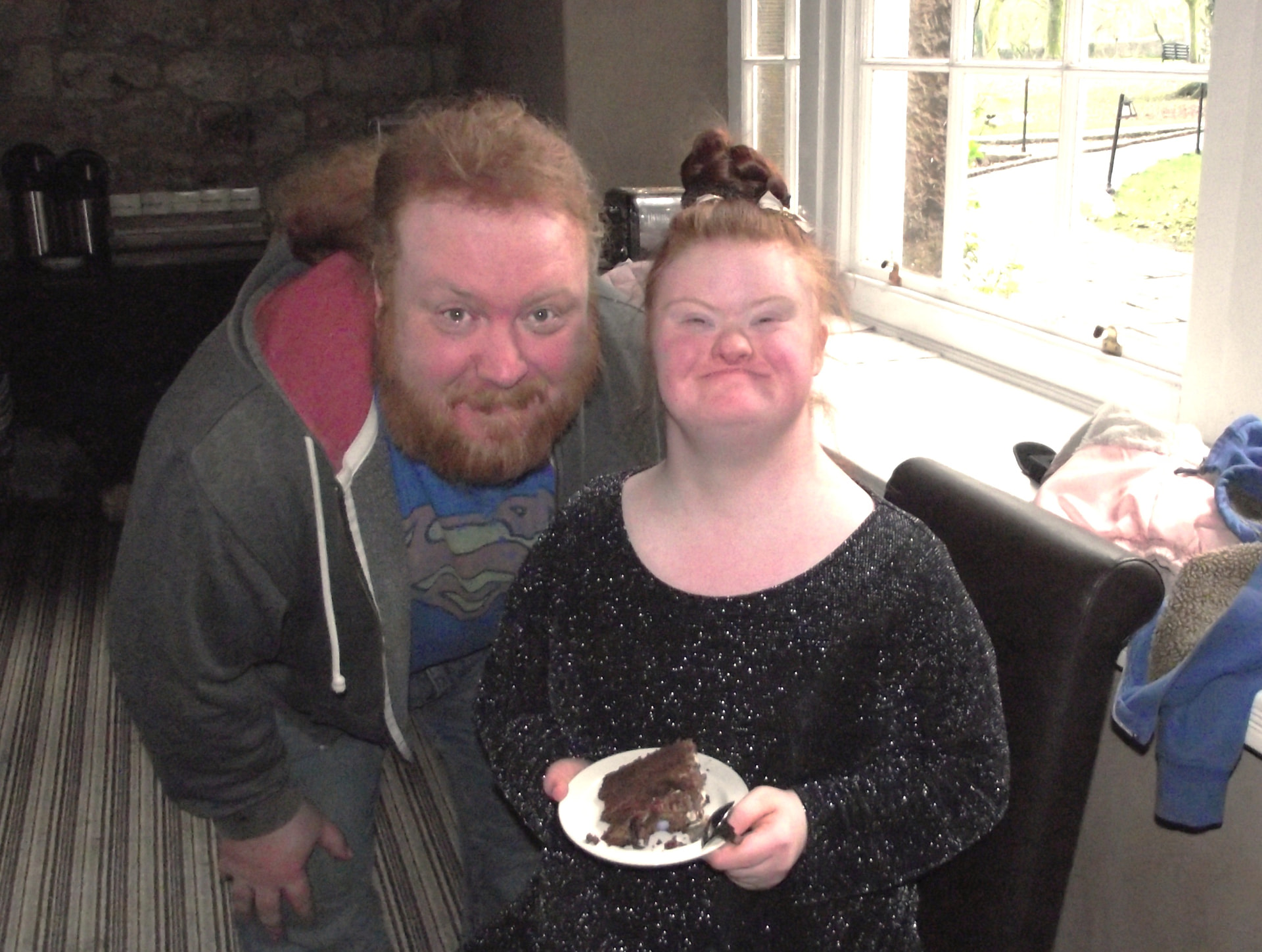
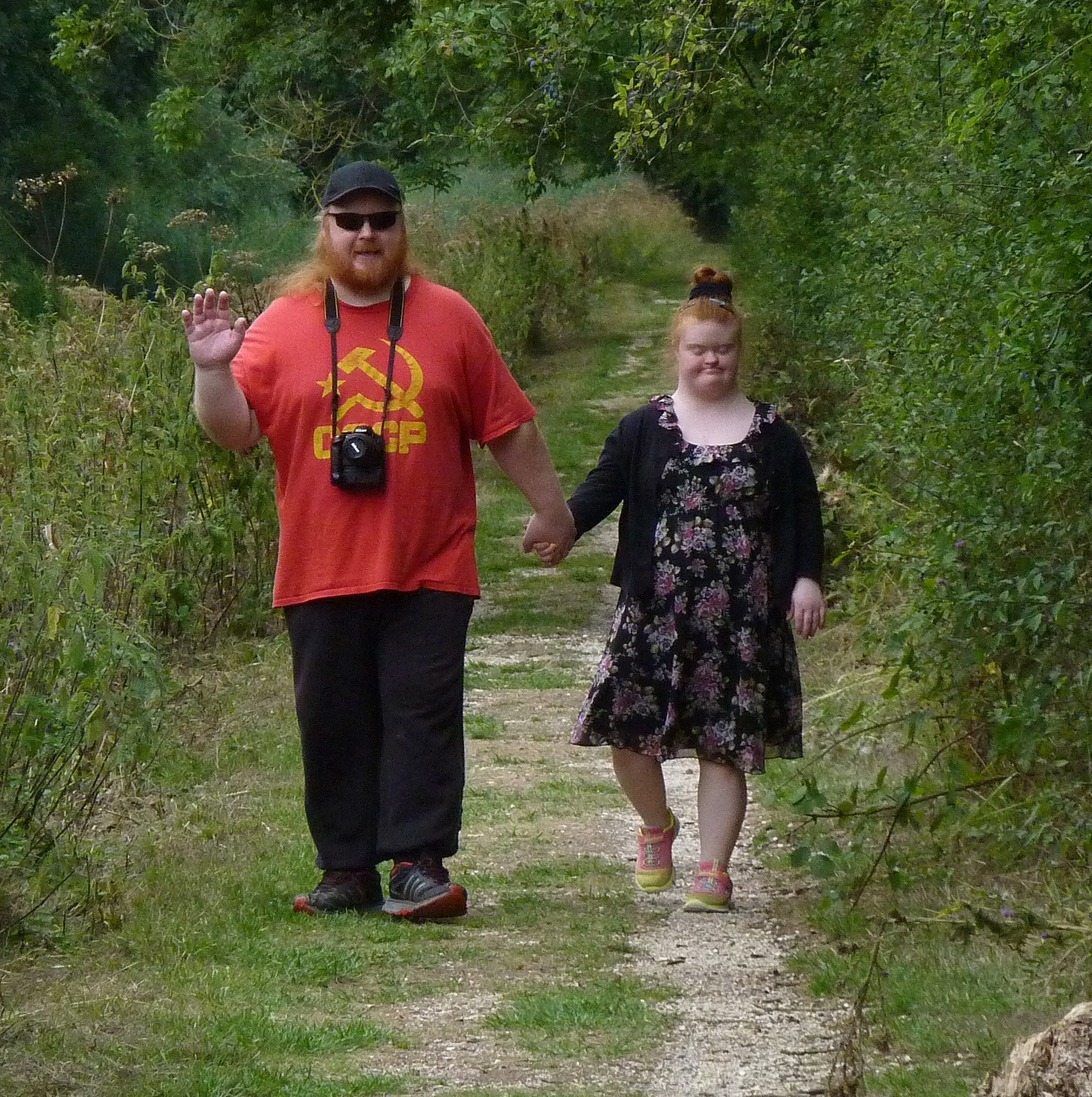
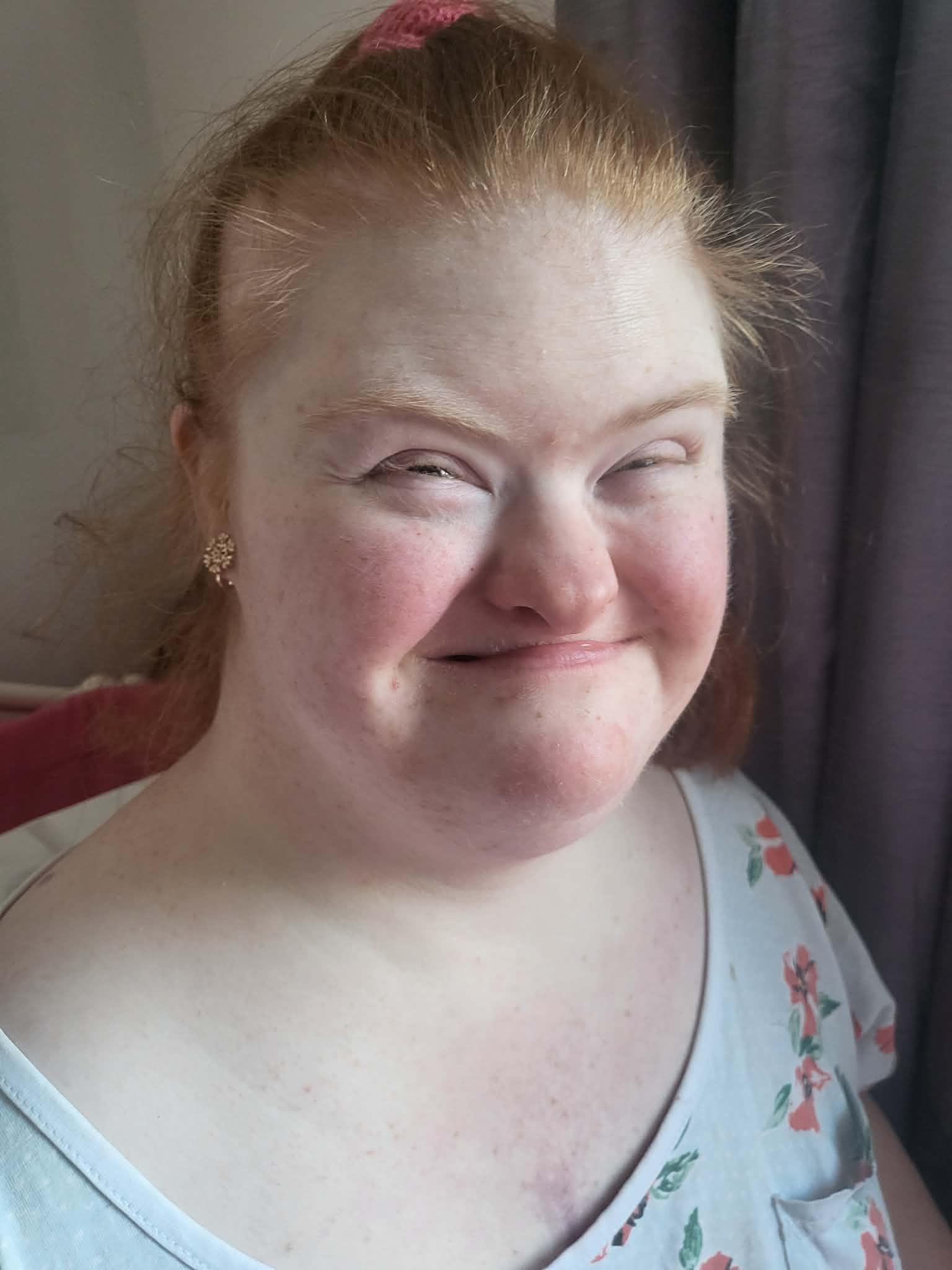
The most terrible day of my life was when my little sister Amy passed away, early in the evening on the 6th March. Her death was sudden and unexpected. And it felt like my entire world had come to a sudden halt, crashing down around me. The news felt both unbelievable and impossible. My mind couldn’t process it – still can’t. Amy had gone into hospital only a couple of days before, feeling giddy and excited about being away from home, to undergo supposedly ‘routine’ surgery – and we’d been told there was a very high success rate. The operation had apparently gone well. And for two nights, family members had sat by Amy’s bedside, watching her recover. Earlier that day, on the 6th March, the nurses had said all was okay and that Amy was making solid progress – and we were told that we should go to our room and get some sleep. Then, out the blue, we got the call to hurry back to the intensive care unit. And on arrival, we were informed that Amy had only minutes left to live … Amy was already unconscious; we never got the opportunity to either hold her properly or to say a meaningful goodbye.
To introduce my little sister, Amy was born on December 6th 1996, at 6:30am, at Blackpool hospital. She took her place in a large family, having two brothers (myself and Philip) and two sisters (Emma and Lisa). Together with parents, Phil and Gill, Amy had both sets of grandparents. And, of course, let’s not forget the many uncles and aunties, as well as a large extended family …
Born prematurely, Amy weighed just 4 pounds 13 ounces. And she was born with Down’s syndrome. A common issue with Down syndrome babies, Amy was born with congenital heart defects. And so, within just days, Amy was moved to Alder Hey Children’s Hospital in Liverpool – and underwent life-saving surgery. Amy’s close family spent that Christmas at the hospital … And all went well! Shortly into the new year, Amy came home – and the family celebrated.
Notwithstanding her genetic condition, physical weaknesses and intellectual disability, in my view Amy was perfect!
I was 21 years old when Amy was born. And I had been working on the night of the 5th December 1996, performing as a mobile DJ (providing music at a Christmas party at Longridge, with my friend Andrew). On arriving home, my grandad greeted me – to let me know my expectant parents were at hospital and that the birth was imminent. The next morning, I got up early – popped to a local shop, buying a bottle of Champagne, chocolates and flowers. I quickly drove to the hospital, found the maternity ward, and congratulated my mum and dad! I was then told that Amy was born ‘blue’, had a hole in her heart, and had Down’s syndrome.
Having Down’s syndrome didn’t matter to me one iota. My only concern was that Amy got well … Never, at any point during Amy’s life, did her physical / intellectual disabilities cause me to have negative feelings or thoughts towards her. Each and every person is different, unique, with their own individual capabilities and needs. And I don’t judge – or assess the value of a person – based on such capabilities or needs. So, on finding out that Amy was Down’s syndrome, I never again gave the matter any further thought.
Although that initial surgery had been a success, it was only a temporary measure. A more important operation was needed about 18 months later … And so, Amy settled into the family home – and we were happy, albeit worried about the future. What mattered most is that we had a little baby girl to love … joining her little infant brother, Philip, who was only one-and-a-half years old. It was a happy time! Amy was like any other newborn; and quickly developed into a cheeky infant!
Sometime later, along we went to Alder Hey for Amy to have her second surgery. The family were provided with accommodation, and we remained close to Amy’s bedside for a few weeks. Again, all went well – and, on returning home, Amy made a fantastic recovery. As the years went by, she went from being a young girl to a teenager; and later developed into a wonderful young lady. As a family, we knew that further surgery would be needed – likely when Amy was in her early-to-mid 20’s … but her condition did not cause her any undue problems, and Amy lived life to the full – always playful and running about.
Amy most enjoyed spending quality time with her family. If possible, she’d have gone away on holiday to a “big house” for two weeks out of every month! Holidays were her favourite thing. She travelled to Ireland and France, but her preferred locations were Wales and Scotland. Oh, and the town of Pocklington (near York). These were destinations she’d visited often as a child, and her fondness for them never waned. Amy also enjoyed nights away at hotels. And staying with family, wherever they lived, was also a preferred option (such as staying with me at Pooley Bridge, when I lived there; or with Lisa and her husband Dave in Lincolnshire). But even a tent in the back garden would do!
Besides holidaying, Amy’s passion was special occasions – especially Christmas, Halloween, birthdays, and Easter. Each of these was a good reason to put up lots of trimmings, decorations and banners … as well as to dress-up, either in fancy dress costumes or party clothes. Amy was most alive – laughing and playing – at these special occasions.
Over the years, we did so much with Amy … from dinghying on the river Lune to ten pin bowling at Morecambe, from ‘trick and treating’ around Scorton to going swimming at a local pool near Garstang. Most regularly, we took Amy to nearby playfields. Amy would enjoy playing on the swings, going on the slide, and running across the football pitches. She was also a big fan of biking round the playing fields on her tricycle. Of course, these was so much more Amy enjoyed … such as eating out (chips, pizza, curry, wraps, Subways) and squirting people with water-cannons!
Amy was my sweetheart. I loved her dearly. I consider her my platonic soulmate. She was a kind, caring, cute and beautiful young lady. Amy was also a bundle of joy, so playful and carefree. As mentioned, I was 21 years of age when Amy was born – old enough to be her parent. And as her big brother, I willingly took on multiple roles, as Amy’s guardian, play mate and friend. I made sure she was safe, and that she had all the toys and games she ever wanted. Having been born with both intellectual and physical disabilities, I knew Amy would occasionally require some extra support and assistance. I did what I could, without question. And I revelled in taking part in playful activities.
I had the distinct privilege of spending a great deal of time with Amy, especially since 2007 (after completing my PhD studies). Working from home, as a distance-learner tutor, meant I was always able to arrange my time in ways that best accommodated the needs of others. And since 2013, I often found myself sharing a twin room with Amy (she required assistance during the night). As a result, we became very good friends – sharing a sense of humour, as well as a taste in music and a common fondness for certain TV shows. And in these circumstances, routines were formed …
To illustrate, on awakening each day, I would go over to Amy’s bed and gently wake her up. She’d smile – and then give me a hug and a kiss. Later in the day, for our evening meal, we always ate together as a family – with Amy at the head of the table! And following that meal, I’d typically go lay down on my bed to read. Then, as if ready to pounce, Amy would pull off my shoes and socks – and proceed to tickle my feet! We’d both laugh and giggle. And Amy would gleefully threaten to “pinch my hair bobble” and “get my bum”!
As night-time set in, Amy and I would chat – she’d name everyone in the family, talk about her favourite foods, and reminisce about holidays. And she’d talk about the future; about things she wanted to do and places she wanted to visit. Most importantly, Amy longed to sail on a boat and fly in an aeroplane. As we chatted, Amy listened to YouTube, watched the Wiggles, the Moomins, Postman Pat, Pingu and He-Man. And she’d ask me to play music – everything from Ken Dodd to the Seekers, from Roger Whittaker to Bob Dylan, and from Kylie to Boney M. Eclectic tastes! Finally, at about 3am, Amy drifted off to sleep. And I’d check on her at least twice during each night …
I knew Amy was unwell. She’d meant to have relatively straightforward surgery in around 2018-19, but the NHS had been too busy. Then Covid-19 came along and everything got delayed further. In Autumn 2023, some five years late, Amy was rushed to hospital with late-stage heart failure. Because of the delays, things had worsened considerably. Yet amazingly, she made a remarkable recovery. Initially, the specialists had given her just days to live … this turned into weeks and months … and then years! In the first instance, the doctors had said surgery was impossible. Later, they said it would be a near certain success. My parents understandably grabbed hold of the positive news – and clung to it. Not wanting to wait until a possible relapse, my mum and dad wanted the surgery as soon as possible – to allow Amy the best possible of healthy futures.
My parents had only the best of intentions. They acted with love, always thinking of Amy’s wellbeing. But as for myself, I found I’d adopted an odd, somewhat warped mindset. Having been told Amy might have died in 2023, I couldn’t get it out of my head that she was still extremely ill. Somehow, I’d blinkered myself off from Amy’s amazing recover. Day to day, she was fine – full of life and displaying no real sighs of illness. But I was intensely afraid of the upcoming surgery. I tended to focus only on the risks. For so many months, I hadn’t slept properly, my mind greatly troubled – as the prospect of Amy’s upcoming surgery haunted my thoughts. Being pessimistic, I put the chances of success much lower than the surgeons said. Experts can make mistakes. As a professional social scientist myself, I’m all too aware that experts do make errors. Had it been my decision, I’d have delayed the operation – waiting until Amy started to show signs of further deterioration. For although it was essential surgery, it was nonetheless elective – in terms of when it would happen. But I didn’t want to cause any upset. It wasn’t my place to decide. The physicians said Amy was ready. So instead of disagreeing, I stood strong by my parents’ side.
Still, knowing that Amy might not survive, I sought to spoil her. During 2024-25, I took a year of unpaid leave off work, in order to spend more time with Amy. I’d hoped to go travelling with Amy and others in a campervan. I bought her whatever she wanted, taking her away to hotels, and going on a lengthy Christmas holiday.
But I blame myself for not doing more. Most crucially, I could have demanded that the surgery be postponed, especially as Amy had an open sore on her inner thigh. It was not imperative that Amy go for surgery in March 2026. It could have waited several months, perhaps even years. All this potential time – that Amy could have had, and we could have enjoyed with her – has been lost out on. Amy went for surgery without knowing what it involved; she trusted implicitly her family caregivers and medical practitioners. Yet if there had been a postponement, I could have used the additional time to undertake further research, better educating myself, putting myself in a more informed position to better guide and instruct both my parents and the physicians.
Thinking about it, there were two other things I could also have done … First, I should have been more assertive with the doctors and nurses, ensuring that better medical care was provided - for several things did go wrong. I could also have remained by Amy’s bedside, ready to assist when things started to deviate from their expected course (but they told me to leave). And second, I could have done more for Amy before the surgery – for instance, treating her to an aeroplane ride, as well as to more weekends away.
In all these regards, I feel that I’ve failed. Amy suffered a needless, pointless, premature death. And during her final two days – as she lay in the intensive care unit – Amy’s morphine kept running out, leading her to wake up several times. During these ‘waking’ episodes, Amy was in complete panic and distress, not knowing what was going on, waling, screaming, trying to pull out her tubes and wires, and seeking to get off the bed … I had to use physical force to restrain my little sister, to hold her in place, as the nurses were not strong enough.
It turned out that, due to various issues (such as not frequently changing her surgical dressings, and not regularly turning Amy on the bed), she developed pneumonia and sepsis. As a result, her organs shut down. And she suffered a heart attack. At 1pm on March 6th, the medical staff were insisting all was “okay” and going “as planned”. By 4:30pm March 6th, Amy was in the final stages of dying!
In my 20’s, while studying part-time, I worked for a number of years as an emergency medic with the ambulance service. I specialised in immediate decision-making, diagnosis, and treatment of individuals with acute, serious, or life-threatening illnesses and injuries. While I’m not a medical expert, I can nonetheless understand all the monitors that were hooked up to Amy. And I could tell – a full 24 hours before she died – that Amy was very unwell, and not recovering. She had a high temperature. She was panting, struggling for breath. Her skin was too pale. Her pulse was too fast. There was a strong smell from a surgical dressing. And her urine output had reduced … All classic signs of infection. I told the staff. They dismissed my concerns. I suspect I wasn’t taken serious because of stereotyping – I have long hair, a bushy beard, and wear colourful clothes. I look more like a ‘mountain man’ than a professional. So, I was dismissed and ignored.
Until the day I die, the failures I’ve identified will haunt me. I just wish I could say to Amy: ‘I am so sorry.’ But dwelling on these thoughts will do no good at all. And Amy did not like to see people upset or angry …
Amy made me a better man. She taught me patience and kindness. To look out for others more than for myself. And to take pleasure in everyday things. I will seek to live by her example. I’ve learned that it’s the simple things that matter most: good food, good drinks, good company, and travel. While I will struggle to move forward, I shall nonetheless seek to do so in a way set by Amy’s example. Bear no grudges. Seek to tell no lies (Amy was incapable of lying). Smile, hug and kiss loved ones. Live for today and tomorrow … and what’s beyond that is irrelevant, as it’s not under our control. It’s hubris to consider otherwise.
For all my physical strength and developed intellect, Amy was my superior. If it were possible to swap places with her, I would. Unfortunately, it isn’t. I’m left feeling grateful, happy and proud to have known her, and to have been loved by her. Amy will not be forgotten. But right now, I am struggling with grief …